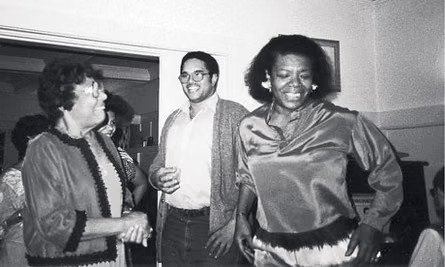
Most people who finish I Know Why the Caged Bird Sings put the book down with the same quiet question: what ever happened to Bailey? As Maya Angelou’s older brother, he is one of the most vivid people in her writing. He is warm, funny, and deeply present throughout her childhood accounts. And yet, outside of her books, he left almost no public record.
This article covers what is factually known about Bailey Johnson Jr — his background, his confirmed biographical details, how Maya portrayed him in her autobiographies, and why so little exists about his life beyond her pages.
Who Bailey Johnson Jr Was
His full name was Bailey James Johnson Jr. He was Maya Angelou’s older brother by one year. According to a memorial record on Find a Grave, he was born on February 28, 1927, in St. Louis, Missouri. He died on October 16, 1999, in Winston-Salem, North Carolina, at the age of 72.
His parents were Bailey Johnson Sr. and Vivian Baxter Johnson — the same parents as Maya Angelou, who was born Marguerite Annie Johnson. The two siblings shared not just parents but an entire childhood shaped by frequent moves, separation, and the tight bond they formed because of it all.
Bailey Jr. was not a public figure in his own right. He did not seek the spotlight, and he never became famous independently. He is known today almost entirely through his sister’s autobiographical writing and through family and genealogical records. That alone makes him an interesting figure — someone who mattered enormously to a beloved writer, yet lived most of his life quietly away from public view.
The Johnson Family Background
The Johnson family story is one of movement and rupture. When Bailey and Maya were still very young, their parents’ marriage broke down. The two children were sent to live with their paternal grandmother, Annie Henderson, in Stamps, Arkansas. She ran a small general store there and raised the siblings with structure and strong values.
Their father, Bailey Johnson Sr., worked as a naval dietician. Maya’s accounts describe him as charismatic and handsome but largely absent from his children’s day-to-day lives. He showed up at key moments but was not a consistent presence in the way the children needed.
Their mother, Vivian Baxter, had her own force of personality. She was independent, striking, and capable. But her relationship with her children was complicated. She and her son and daughter reconnected at different points across the years, but those reunions were not always smooth or easy. Maya explored this complexity across multiple volumes of her autobiography series.
The siblings moved between Stamps, St. Louis, and California more than once. Each move meant adjusting to a new environment, a new set of rules, and sometimes a new set of dangers. What stayed constant was each other. In an unstable world, Bailey and Maya were each other’s steady point.
It is also worth remembering the broader setting. Both children grew up in the American South during the era of Jim Crow segregation. Stamps, Arkansas in the 1930s meant separate and unequal schools, racial hierarchies enforced by law and by violence, and economic hardship that hit Black families especially hard. That environment shaped who they became — and it runs through every page of Maya’s writing about that time.
Bailey Jr in I Know Why the Caged Bird Sings
In her first and most widely read autobiography, Maya Angelou describes her brother as the most important person in her childhood. That is not a small statement for someone who went on to know poets, presidents, and artists. But for young Marguerite, Bailey was everything.
Literary study guides, including the SparkNotes analysis of the book, describe him as graceful, attractive, outgoing, and charming. He was the kind of person who walked into a room and made it warmer. Maya, by contrast, was more reserved and self-conscious as a child. She admired him openly and looked to him as a model for how to move through the world.
He is referred to in her account as the “jewel” of the family. You get the sense that he wore that role lightly — he did not seem to strain under the pressure of being beloved. He just was.
The two siblings relied on each other through every household change. When the adults around them were inconsistent or unreliable, they turned to each other. That dynamic — two children forming a small, loyal unit inside a larger unstable family — is one of the emotional cores of the book.
Bailey’s adolescence also offers a different angle on the same painful world. His encounters with racism and authority mirror Maya’s in some ways but differ in others. He was a young Black man navigating the Jim Crow South, which came with its own specific dangers and humiliations. Some of the book’s most difficult moments involve what happens to Bailey as he grows older and runs up against a world that does not make room for who he is. His story in the book shows how the same system of racial oppression could shape two siblings differently, even when they grew up side by side.
Bailey Jr Across Maya Angelou’s Other Autobiographies
Maya Angelou wrote a series of autobiographical books that span decades of her life. I Know Why the Caged Bird Sings is the most detailed look at the childhood she and Bailey shared, but he does not disappear after that first volume. He surfaces in later books too, though the portrait becomes less detailed as their adult lives pulled them in different directions.
That is a natural thing. Siblings who are inseparable as children often find that adult life — work, geography, relationships — creates distance. That distance does not erase the early bond, but it changes it. Maya’s accounts reflect that shift over time. The closeness of childhood gives way to something more complicated and less frequently examined on the page.
What Bailey did professionally in adulthood, whether he married or had children, where he lived between his years in St. Louis and his death in Winston-Salem — none of that is documented in public sources. Angelou herself did not lay out those details in her published work. That gap is worth acknowledging directly rather than filling with guesswork.
This is not unusual for relatives of famous people. Many siblings, parents, and close family members of public figures live entirely outside the spotlight. Their lives are real and full, but because they did not write memoirs or build public careers, the record is thin. Bailey Johnson Jr. is a clear example of that. His importance to Maya Angelou’s story is well-documented. His life beyond that story is largely his own.
Why He Still Matters to Readers
There is a reason people search for Bailey Johnson Jr. long after they finish Caged Bird. Maya writes about him with such affection and detail that he feels like someone you know by the end of the book. Readers naturally want to know what came next for him.
For students studying the book in school, Bailey is often one of the first characters analyzed in class. Study guides consistently point to him as one of the few reliable sources of warmth and protection in Maya’s early life. That makes him significant not just personally but literarily — he helps explain why Maya Angelou survived and eventually flourished.
Some literary critics read him as representing youthful idealism and, later, the corrosive weight of racism on Black men coming of age in mid-twentieth-century America. That reading gives his character a weight beyond the personal. He becomes part of a larger story about race, resilience, and what it cost people to simply live with dignity in that era.
For anyone researching Maya Angelou’s family tree or tracing her biography in detail, the genealogical record that exists for Bailey James Johnson Jr. — birth in St. Louis in 1927, death in Winston-Salem in 1999 — offers at least a factual anchor. It confirms that he lived a full life of 72 years, even if the details of that life are not part of the public record.
If you enjoy reading about the lives and families behind famous writers and public figures, resources like Startbusinessverse cover a wide range of profiles that connect people to the broader stories shaping their lives.
A Private Life, A Public Legacy
Bailey Johnson Jr. never became famous. He was not an entertainer, a politician, or a public intellectual. By all available evidence, he lived a private life from beginning to end. He was born in St. Louis, and he died in Winston-Salem more than seven decades later, and very little of what happened in between made it into any public record.
What he did leave behind is a presence in some of the most important American writing of the twentieth century. Maya Angelou made sure of that. She wrote about him with love and honesty, capturing a version of him that millions of readers have now met. That is its own kind of legacy — not the one he sought, but the one he has.
For readers who want to understand Maya Angelou more fully, understanding Bailey is part of that work. He helped shape the person she became. And she, in turn, made sure he was not forgotten.
Read Also: